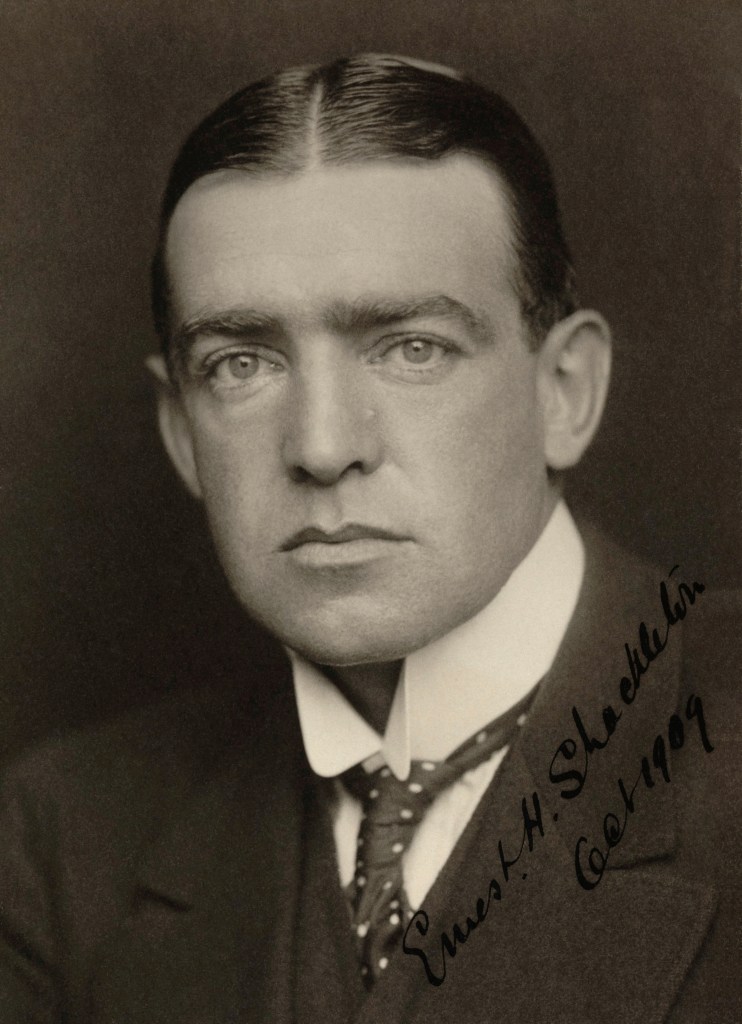
Jay Gould did not talk like a robber-baron cartoon. He talked like a reserved, bookish operator who would rather go home to his family than buy a yacht: exact, formal on paper, and always circling back to work, duty, and the people in his house. This Founder Voice Card collects how he actually sounded, in short lines verified in Edward J. Renehan Jr.’s Dark Genius of Wall Street, the book behind Deeply Driven’s Jay Gould episodes.
How he talked
Word choice. He sounded like a careful letter-writer, not a stump speaker. He leaned on plain, slightly old-fashioned nouns: duty, business, home, family, fortune, peace. He called Wall Street “this smoky world of stocks and bonds,” and the skills to be learned there “magician’s skills.” When he needed a picture of himself, it was domestic: a library, a greenhouse of orchids, a child chirping like a bird in a carriage around Union Square.
Rhythm. On paper he builds a thought, then lands. A sentence often starts formal and snaps shut on a short line: I mean to learn them. I cannot help that. I want the world for you all. Keep those landings when you quote him. He did not orate. He wrote.
Humor. What humor he has is dry and a little self-accusing. “I have the disadvantage of not being sociable,” he told a reporter, and then explained that his tastes would not make him popular on Wall Street. He could also be tart about his own legend: the fact of his father’s poverty, he once said, was “not worth one dime to me.”
Cursing. In the letters and interviews Renehan quotes, he stays clean. Do not invent salt for him, and do not hang on him the theatrical villain’s lines that later generations wrote in his name.
In his own words
Fourteen of Jay’s own lines, in life order.
Quotes are drawn from Edward J. Renehan Jr., Dark Genius of Wall Street: The Misunderstood Life of Jay Gould, King of the Robber Barons (Basic Books, 2005), which quotes Gould’s letters, remarks to reporters, and testimony.
“As regards the future world, except what the Bible reveals, I am unable to fathom its mysteries. But as to the present, I am determined to use all my best energies to accomplish this life’s highest possibilities.”
Edward J. Renehan Jr., Dark Genius of Wall Street (2005), chapter 4, “A Deliberate Student.” Told to a friend in his youth, when college was slipping out of reach.
“I intended as soon as my finances would permit to take a course through college, but as my father requires a share of my time here, it seems wrong to do otherwise than remain for the present.”
Dark Genius of Wall Street, chapter 4. From a letter to his cousin Taylor Moore.
“I am not in the habit of bagging out what I undertake, and shall write night and day until it is completed.”
Dark Genius of Wall Street, after the manuscript and printer’s plates of his History of Delaware County were destroyed by fire. He was about twenty, and he rewrote the book.
“I am trying to start myself in this smoky world of stocks and bonds. There are magician’s skills to be learned on Wall Street, and I mean to learn them.”
Dark Genius of Wall Street, chapter 11, “A Particular Future.” Written to James Oliver as Gould left the tannery years behind and took up Wall Street.
“I have tried to make it my business to achieve some of the things that were denied him.”
Dark Genius of Wall Street. On his father, John Burr Gould, long after the older man’s death: a man, Jay said, who “walked a hard road” and “drank from a bitter cup.”
“The boy chirps like a bird. We push him in the carriage quite proudly round Union Square, and then up to Madison Square.”
Dark Genius of Wall Street. Written to his sister Sarah after the birth of his son George.
“In a Republican district I was a strong Republican, in a Democratic district I was Democratic, and in doubtful districts I was doubtful. In politics I was an Erie railroad man every time.”
Dark Genius of Wall Street, chapter 21. Told to U.S. Senate investigators in 1873, about political contributions made for the Erie Railroad.
“I have the disadvantage of not being sociable. Wall Street men are fond of company and sport.”
Dark Genius of Wall Street, chapter 22, “A Damned Villain.” Told to a reporter around the time he was happiest at home with a simple greenhouse of orchids on the roof. He went on: “A man makes one hundred thousand dollars there and immediately buys a yacht, begins to drive fast horses, and becomes a sport generally. My tastes lie in a different direction.”
“When business hours are over, I go home and spend the remainder of the day with my wife, my children, and books of my library. Every man has natural inclinations of his own. Mine are domestic — they are not calculated to make me particularly popular on Wall Street — and I cannot help that.”
Dark Genius of Wall Street, chapter 22. The rest of the same reporter’s interview.
“I am devoted to you children. I want the world for you all, and happiness for you all.”
Dark Genius of Wall Street, chapter 25, “Everything but a Good Name.” Written to his daughter Helen (“Nellie”) in the early 1880s, during one of his western trips.
“I sometimes think I should like to give up business entirely. The care and worriament attending large business interests are very great. But besides that fact, the manner in which motives are impugned and characters assailed is very unpleasant.”
Dark Genius of Wall Street, chapter 27, “Ambition Satisfied.” Told to a reporter for the Commercial and Financial Chronicle in early 1882.
“I am going to try a little play. I did not have the opportunity when I was young, and I must do my playing later in life. If I like it, I may keep it up.”
Dark Genius of Wall Street, chapter 27. Told to an interviewer as his yacht, the Atalanta, was being built in Philadelphia.
“The fact of my father’s poverty is not worth one dime to me.”
Dark Genius of Wall Street, early in the book, from a later interview. His usual answer when a persistent reporter tried to trade on his humble background.
“I guess I’m through with giving. It seems to cause nothing but trouble, trouble. Everything I say is garbled, everything I do is purposely misconstrued. I don’t care especially about myself, but it all comes back so on my family.”
Dark Genius of Wall Street, chapter 27. Told to Alice Northrup after a gift to help the University of the City of New York buy a campus in the Bronx was met with public rebuke. Renehan notes that he continued to give, but quietly.
Famous quotes Jay Gould never said
These circulate under his name. The wording is not his, or no source from his lifetime has been found. Do not use them as Jay’s words.
“I can hire one half of the working class to kill the other half.” The sentence is not in Dark Genius of Wall Street. As Garson O’Toole traces it in Quote Investigator (October 29, 2017), the earliest version located is not “working class” at all. In a letter published in October 1891, John Livingston, president of the New York State Farmers’ Alliance and a political adversary, called it a “characteristic remark” of Gould’s that he “could hire one-half the farmers to shoot the other half to death.” Livingston did not claim to have heard it himself. The wording later shifted to “people,” and only decades after Gould’s death, to “working class.” No speech, letter, or interview in Renehan supplies the line.
Other circulating one-liners are left out of this section because they cannot be fairly documented as misattributions.
Hear the story
These lines come to life in Deeply Driven Episodes #4 and #34, collected on the Jay Gould page:
The founder page is deeplydrivenpodcast.com/jay-gould.