Welcome
Deeply Driven is a business history podcast about the founders, entrepreneurs, and explorers, who turned simple ideas into lasting companies.
Through biographies, autobiographies, and their own words, host Larry Carlton explores the stories behind people like Sam Walton, Steve Jobs, Henry Ford, Jim Casey, and Estée Lauder, and the simple and deep lessons we can learn from their lives.
Our Deeply Driven Friends
Andrew Carnegie
A Scottish immigrant who started as a bobbin boy and rose through the telegraph and railroad industries to build Carnegie Steel. By 1900 his company produced more steel than all of Great Britain, and when J.P. Morgan asked him to name his price, Carnegie wrote $480 million and Morgan accepted without negotiating. He then spent his later years giving his fortune away, including funding thousands of public libraries.
Jim Casey
Casey became his family’s breadwinner as a boy and, at 19, started a messenger service in a Seattle basement that grew into UPS. His core belief was that anyone could deliver a package, but the difference would be service: on time, to the right place, in a clean uniform, with a smile. He spent 76 years building the company around that idea.
S. Truett Cathy
The founder of Chick-fil-A learned service in his mother’s boarding-house kitchen and customer care on his newspaper route. He and his brother opened the Dwarf Grill in 1946, and after two decades of learning the business, he opened the first Chick-fil-A in 1967. His decision to close on Sundays and his focus on character over experience became defining parts of the brand.
Joe Coulombe
Coulombe founded Trader Joe’s in 1967 in Pasadena, turning a small convenience store chain into a grocery store unlike any other. He focused on educated, adventurous shoppers, private-label products, and a quirky, nautical-themed culture. His memoir, Becoming Trader Joe, is a masterclass in carving out a niche instead of competing head-on with giants.
Samuel Cunard
A shipping entrepreneur from Halifax, Nova Scotia, Cunard won the British contract to carry transatlantic mail by steamship in 1839. He built his line’s reputation on safety and punctual delivery rather than speed or luxury. That reliability compounded over decades into one of the most famous names in ocean travel.
Henry Ford
A Michigan farm boy who became a machinist, Ford built the Model T and revolutionized manufacturing with the moving assembly line. He famously raised wages to $5 a day so workers could afford the cars they built. His autobiography, My Life and Work, lays out his thinking on service, waste, and production.
Henry Clay Frick
Frick built a coke empire in the Pennsylvania coal fields and became Andrew Carnegie’s partner and chief operator in the steel business. He prized order, control, low cost, and facts over feeling, and the bloody Homestead Strike fixed him in the public mind as a symbol of ruthless industrial power. His partnership with Carnegie ended in a feud that lasted the rest of their lives.
Jay Gould
Gould rose from a hard childhood on a New York farm to become one of the most notorious financiers in American history. He went on to control a dozen or more railroads at once and owned one out of every six miles of railroad track in the United States. Episode #4 covers Dark Genius of Wall Street, and #34 covers American Rascal.
Arthur Guinness
Guinness grew up around a working malthouse in 18th-century Ireland and founded his brewery in Dublin in 1759. For years he sat in the middle of Dublin’s roughly forty brewers, but by keeping his beer consistent, he built the trust that brought repeat orders. More than 250 years later, his name is still on the glass.
H.J. Heinz
Heinz started selling surplus vegetables from the family garden as a boy and began his business bottling horseradish in the family basement. After a financial collapse, he chose to repay old debts even though he wasn’t legally required to, winning back goodwill. He built one of America’s most trusted food brands on quality, fair dealing, and doing common things uncommonly well.
Milton Hershey
Hershey failed at several candy businesses before finally succeeding with the Lancaster Caramel Company, which he sold in 1900 for $1 million to focus on milk chocolate. He built his factory and an entire town around it in rural Pennsylvania, with homes, schools, and parks for his workers, and made chocolate affordable for everyday Americans. He and his wife Catherine founded a school for orphaned boys and later left nearly his entire fortune to it.
Steve Jobs
The co-founder of Apple built his first computers in a garage, was forced out of his own company, and spent over a decade in the wilderness with NeXT and Pixar. At Pixar, Ed Catmull taught him that sometimes the best management technique is to get out of the way and let talented people work. He returned to Apple and led it to the iPod, iTunes, and the iPhone.
Carl Karcher
An eighth-grade dropout who delivered bakery buns, Karcher noticed how many hot dog carts were buying them and bought one himself in 1941. He made just $14.75 on opening day, but that cart grew into a major fast-food company that went public in 1981. He also mentored the Snyders, the family behind In-N-Out.
Herb Kelleher
Kelleher was a lawyer who co-founded Southwest Airlines and fought years of legal battles just to get it off the ground. He built the airline on low fares, quick turnarounds, and a famously fun, employees-first culture. Southwest went on to become one of the most consistently profitable airlines in history.
Stephen King
Before he became one of the world’s bestselling authors, King grew up with little money, raised by a single mother. He pinned rejection slips to his wall so often that the nail gave way and had to be replaced with a spike, but he kept sending his work out. His memoir On Writing shows how mastery is built through years of reading and writing before anyone knows your name.
Estée Lauder
Lauder learned to make skin creams from her chemist uncle and cooked her first batches in her kitchen. She built a devoted following through free samples and word of mouth, and her first Saks Fifth Avenue order sold out within two days. Her creation of Youth Dew, sold as a bath oil so women would buy it for themselves, helped turn her company into a global empire.
Leonard Lauder
Estée’s son grew up watching his mother cook cosmetics in the family kitchen and took her small business global. He vowed to always hire people smarter than himself after finishing in the middle of his Navy officer class. Under his leadership, Estée Lauder grew into a house of 25 brands sold in 150 countries, including Clinique, MAC, and Bobbi Brown.
The Mars Family
The story starts with Frank Mars, who, as a young boy stricken with polio, spent much of his time indoors watching his mother make candies. After repeated business failures, he created the Milky Way bar, and his son Forrest later built M&M’s and a global candy empire. The family’s story is one of setbacks, family feuds, and a relentless drive for quality.
William Murrie
Murrie was the longtime president of Hershey’s who turned Milton Hershey’s visionary ideas into reality. A former telegraph operator, he became the operator and salesman behind the founder’s vision. His story is a reminder that great companies often have a great number two.
Elon Musk
Musk founded SpaceX after being told repeatedly that a private company could never build reliable rockets. After three failed launches, he rallied his team with the words “Build it, and fly it.” Episode #7 covers the birth of SpaceX, and #8 explores his relentless “demon mode” drive to innovate.
David Ogilvy
Ogilvy was a chef, a door-to-door salesman, a Gallup researcher, a wartime intelligence assistant, and a tobacco farmer before starting his agency in New York at 37 with no clients and no money. Within twelve years he had landed every one of the five major companies he wrote down as targets on day one. His rules on research, headlines, and testing still shape advertising today.
Sol Price
A San Diego lawyer turned retailer, Price founded FedMart and then Price Club, which pioneered the membership warehouse store. His ideas on low prices, efficiency, and treating employees well directly shaped Costco and influenced Sam Walton. He is often called the father of the warehouse club.
John D. Rockefeller
Rockefeller grew up between a frugal, pious mother and a con-artist father, a mix of prudence and daring that shaped his business style. Standard Oil grew from controlling 10% of U.S. refining to 91% of global capacity. He tracked every penny, thought long-term, and became America’s first great monopolist and one of its biggest philanthropists.
Fred Rogers
Fred Rogers created Mister Rogers’ Neighborhood and spent decades building one of the most trusted brands in children’s television. His patience, consistency, and deep care for his audience offer surprising lessons for entrepreneurs. His famous sign-off is the inspiration for how you close your own show.
Ernest Shackleton
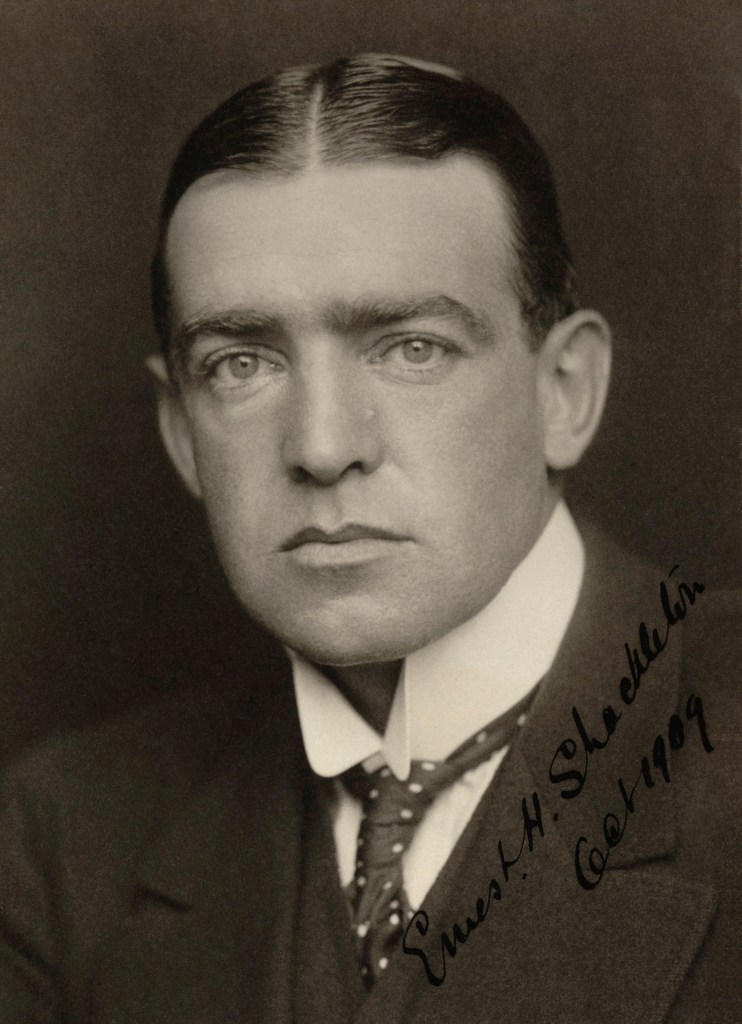
Shackleton set out to become the first person to cross Antarctica, but his ship, Endurance, was trapped and crushed by ice before he ever reached land. He and five men sailed a 22-foot lifeboat roughly 800 miles across some of the most dangerous ocean on earth to get help. When the Endurance sailed south, 28 men were aboard, and all 28 came home.
Isadore Sharp
Sharp opened one small hotel in Toronto in 1961 and grew it into Four Seasons, one of the most respected luxury brands in the world. He believed that if you take care of your people, they will take care of your guests, and the business will take care of itself. Four Seasons appeared on Fortune’s Best Places to Work list every year from 1998 through 2020.
Joe Simpson and Simon Yates
In 1985, the two young British climbers set out to climb the West Face of Siula Grande in the Peruvian Andes, and on the descent Joe shattered his leg. Simon lowered him down the mountain until Joe slipped over a cliff, and Simon made the agonizing decision to cut the rope. Joe survived the fall and crawled for days back to base camp in one of the greatest survival stories ever told.
Michael A. Singer
Singer decided early in life to stop resisting whatever life put in front of him and to say yes instead. That “surrender experiment” led him from meditating in the woods to building a software company worth hundreds of millions of dollars. His book The Surrender Experiment is a story about letting go of control and finding clarity.
Harry Snyder
Harry and Esther Snyder opened a small drive-thru burger stand in Baldwin Park in 1948 and sold 57 hamburgers on the first day. His two maxims were “Keep it real simple” and “Do one thing and do it the best you can.” In-N-Out grew on quality, cleanliness, and service, with almost no advertising.
Kent Taylor
Taylor was a restaurant manager with a dream of opening his own steakhouse, and he heard “no” 130 times before Texas Roadhouse became reality. He built the chain on friendly service, fresh-baked rolls, and a people-first culture. It grew into one of the most successful restaurant chains in America.
Ed Thorp
Thorp was a mathematician who proved card counting could beat blackjack and co-invented a wearable computer to predict roulette. His story reads like a financial thriller, from Las Vegas takedowns to Wall Street innovation. He went on to pioneer quantitative investing and ran one of the first hedge funds, as told in A Man for All Markets.
Sam Walton
Walton opened a single variety store in Arkansas and grew it into Walmart, the largest retailer in the world. He built his empire on a simple idea: sell for less, keep costs low, and stay obsessed with the customer. His autobiography Made in America is one of the most referenced books on your show.
The Wright Brothers
With less than a thousand dollars, no college degrees, no government funding, and no team of engineers, the two bicycle shop owners outbuilt the wealthiest and most credentialed inventors of their era. Wilbur and Orville worked quietly and methodically until they achieved the first powered flight at Kitty Hawk. Wilbur’s public flights in France in 1908 then won over the world.
Sam Zemurray
Zemurray arrived in America as a poor Russian immigrant and got his start buying ripe bananas that other traders were about to throw away. He built his own fruit company in Honduras and eventually took over the giant United Fruit Company. Known as “The Banana Man,” he was one of the most colorful and ruthless business figures of the 20th century.
Greetings,
Welcome to Deeply Driven Podcast! We exist to explore what makes great founders and entrepreneurs throughout business history.